

One of the first questions families ask after an HIE diagnosis is also one of the hardest:
“What is my child's outcome going to be?”
It's an understandable question. Families want to know what life will look like, what their child may need, and what they should prepare for.
The difficult answer is that HIE doesn't have one outcome.
HIE outcomes exist across a broad spectrum — and every child's path is their own.
Some children have no identified disability. Some experience mild impacts that may become more apparent as they grow. Others live with moderate or significant disabilities and may need lifelong support. And, heartbreakingly, some babies and children die.
There are also countless individual lives and experiences within every one of those categories.
Think about HIE outcomes as a spectrum:
No identified disability → Mild impacts → Moderate disability → Severe disability → Death
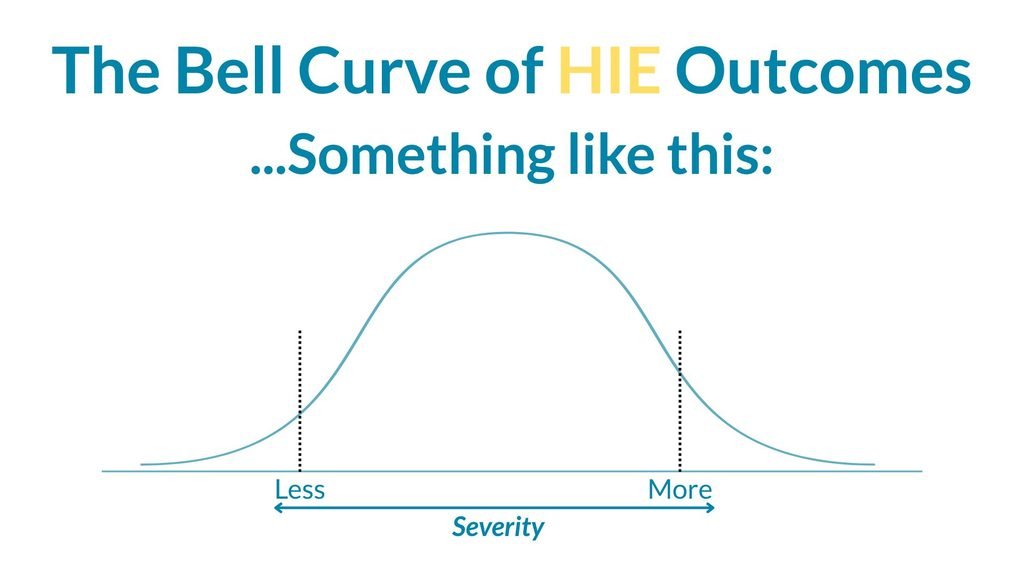
There is no scientifically valid universal percentage we can place beneath each section of that curve.
The bell curve isn't a prediction of where any individual child will fall.
And there isn't one scientifically valid percentage we can place beneath each section. HIE severity, brain injury pattern, treatment, seizures, clinical course and many other factors can influence developmental risk.
Even then, these factors give us information about probability — not certainty.
The bell curve is helpful because it shows something families often need to hear early in the HIE journey:
There are many possible paths forward.
Outcome categories can help researchers study HIE, but they can't describe the whole life of a child, and families often want to segment by their own personal definition of severity.
A child can be thriving and need an IEP.
A child can be independent and have cerebral palsy.
A child can have epilepsy and have an excellent quality of life.
A child can have significant disabilities and experience joy, connection, belonging and meaningful relationships.
And a child who appears to have few or no impacts from HIE may still benefit from developmental follow-up as they grow.
Doing well and needing support are not opposites.
That's why Hope for HIE intentionally moves away from describing outcomes simply as “good” or “bad”, and why it's difficult to have cut-offs for outcome-based support.
We can all learn so much from one another.
One of the hardest parts of the early HIE journey is uncertainty.
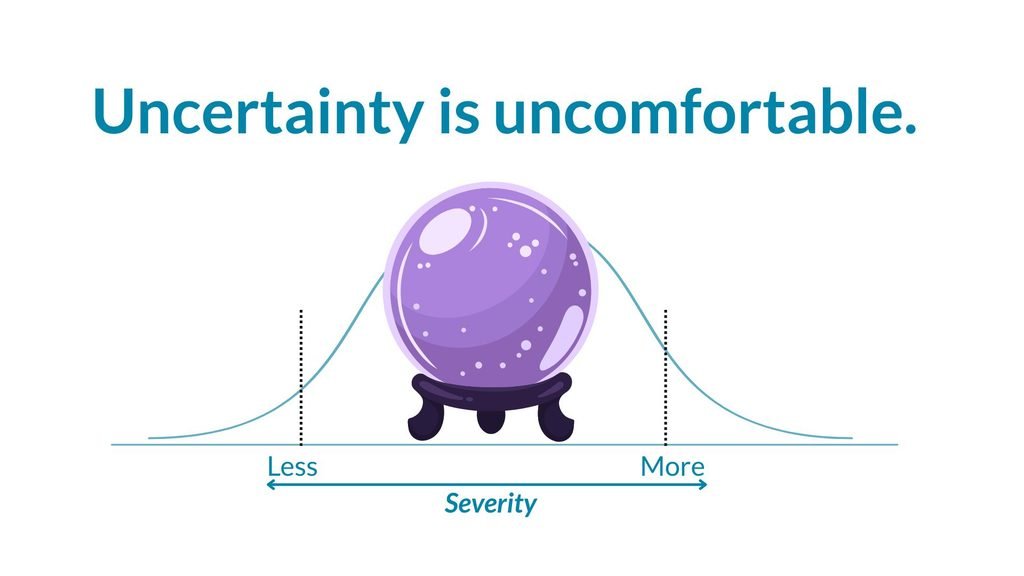
Families understandably want an MRI, EEG, neurological examination or developmental assessment to provide an answer about the future.
These tools can provide important information, but development continues throughout childhood.
A two-year-old isn't yet being asked to read, organize schoolwork, sustain attention through a classroom lesson, manage complex friendships or independently plan and complete tasks.
Research following children with HIE into school age has helped us understand that neurodevelopment includes much more than early motor milestones. Studies have identified differences in areas such as cognition, attention, memory, executive functioning, behavior and learning among some children as they grow. Research following children without cerebral palsy into school age has been particularly important in expanding our understanding of the HIE spectrum.
That doesn't mean families should spend childhood waiting for something to go wrong.
It means no single assessment or age tells us everything about a developing child.
For one family, hope may look like watching a child run onto a soccer field. For another, it may be hearing a new word, finding the right communication system, gaining greater independence, getting seizures under better control, finding a school where their child belongs, or simply watching their child experience something they love.
For families grieving a child who died, hope may take yet another form — carrying their child's life and memory forward, finding connection with people who understand, and contributing to research.
There is no single version of a meaningful life after HIE.
There is also no single timeline for understanding what HIE will mean for a child or family.
If your child has just been diagnosed with HIE, you may feel enormous pressure to understand the future immediately.
You don't have to.
Learn what you can about your child's medical situation. Ask questions. Connect with developmental follow-up and Early Intervention when appropriate. Pay attention to your child's strengths as well as their needs.
And allow their story to unfold.
Whatever your child's path looks like, you are not walking it alone.
We've created a comprehensive HIE Outcomes resource for families who want to go deeper into the research, including:
The science of HIE outcomes continues to evolve, and so do our children.
Our goal is to give families something more useful than either false certainty or fear: credible information, meaningful support, and hope for whatever path unfolds.
For a deeper look at the research, the range of possible outcomes and what we know about development from infancy through school age and beyond, visit Hope for HIE's HIE Outcomes resource.
Conway JM, et al. Mild hypoxic ischaemic encephalopathy and long term neurodevelopmental outcome — a systematic review. Early Human Development. 2018.
Finder M, et al. Two-year neurodevelopmental outcomes after mild hypoxic ischemic encephalopathy in the era of therapeutic hypothermia. JAMA Pediatrics. 2020.
Shankaran S, et al. Childhood outcomes after hypothermia for neonatal encephalopathy. New England Journal of Medicine. 2012.
Azzopardi D, et al. Effects of hypothermia for perinatal asphyxia on childhood outcomes. New England Journal of Medicine. 2014.
Lee-Kelland R, et al. School-age outcomes of children without cerebral palsy cooled for neonatal hypoxic-ischaemic encephalopathy. Archives of Disease in Childhood: Fetal and Neonatal Edition. 2020.
Connect with families, read inspiring stories, and get helpful resources delivered right to your inbox.


Connect with families, read inspiring stories, and get helpful resources delivered right to your inbox.


