

“What does this mean for my child’s future?”
After a diagnosis of hypoxic ischemic encephalopathy (HIE), families deserve clear information, meaningful support and room for hope.
HIE has many possible outcomes. Some children have no identified disability, others experience mild impacts or live with moderate or significant disabilities. Some babies and children die from HIE or related complications.
Hope for HIE uses a bell curve illustration to show the broad spectrum of HIE outcomes:
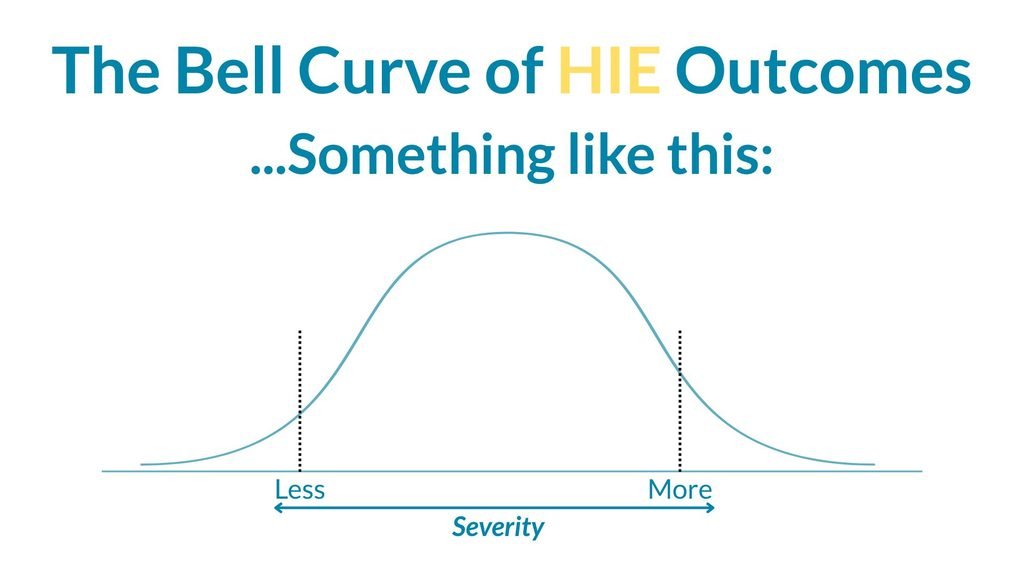
No identified disability · Mild impacts · Moderate disability · Significant disability · Death
Within each category are people with different strengths, experiences and support needs. Someone may need substantial help with movement while communicating independently, or walk independently while needing support with learning and daily activities.
The curve illustrates a spectrum. Its shape does not represent measured percentages or predict where an individual child will fall.
People across the spectrum can experience joy, relationships, learning and belonging. Families also deserve honest conversations about medical complexity, caregiving demands and access to support.
Hope and support extend across the entire spectrum.
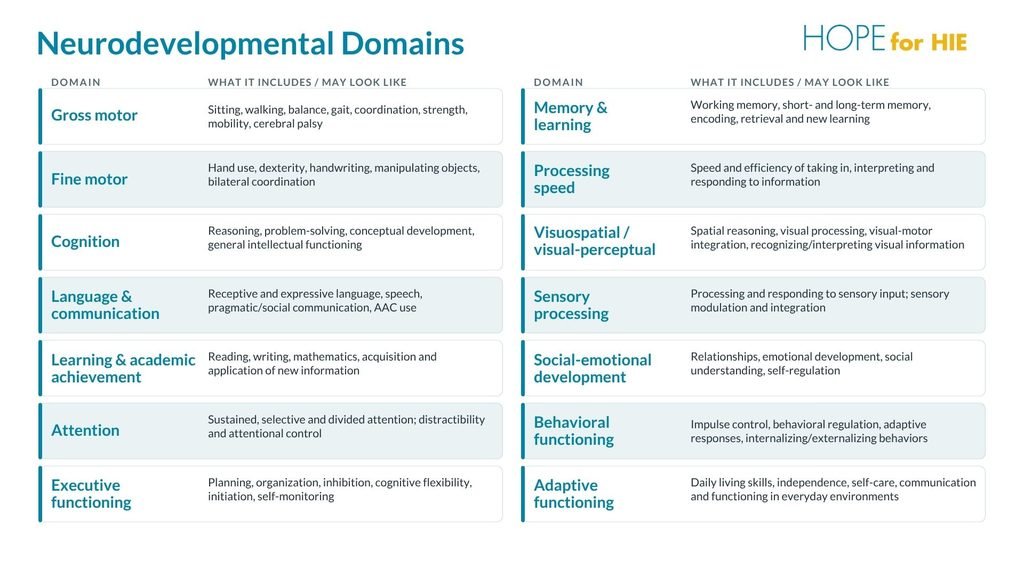
HIE can affect different areas of health and development. Some children have few or no identified impacts; others have needs in several areas.
These are possibilities, not a checklist of what will happen. Your child’s medical findings and development help guide individualized care.

A diagnosis identifies a condition. A prognosis estimates how that condition may affect someone over time.
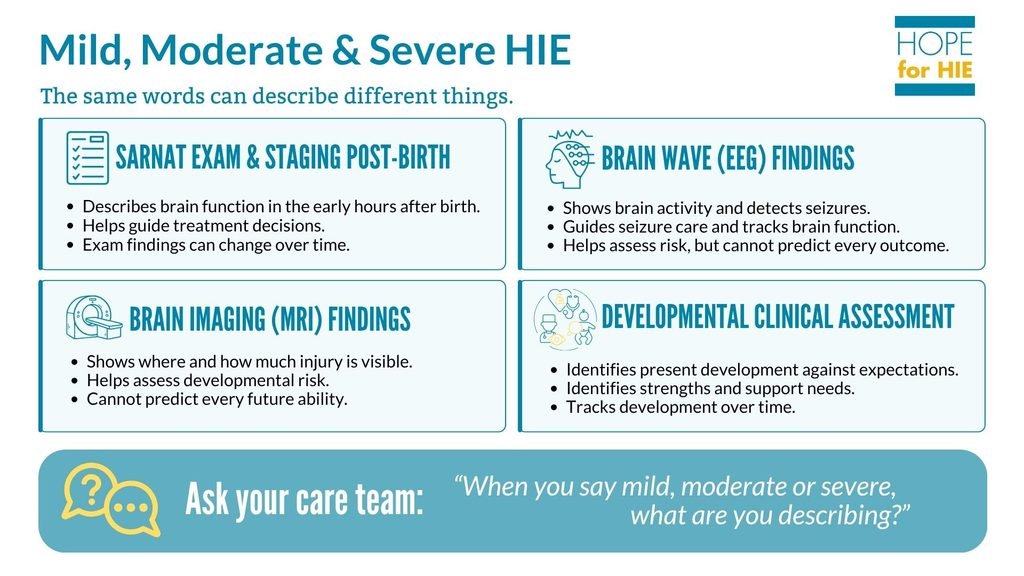
An HIE diagnosis does not provide a complete picture of a child’s future. MRI, EEG and neurological examinations help clinicians understand risk. Follow-up adds information about strengths and support needs as development unfolds.
Waiting for answers can be difficult. Families deserve explanations of what is known, what remains uncertain and what comes next.
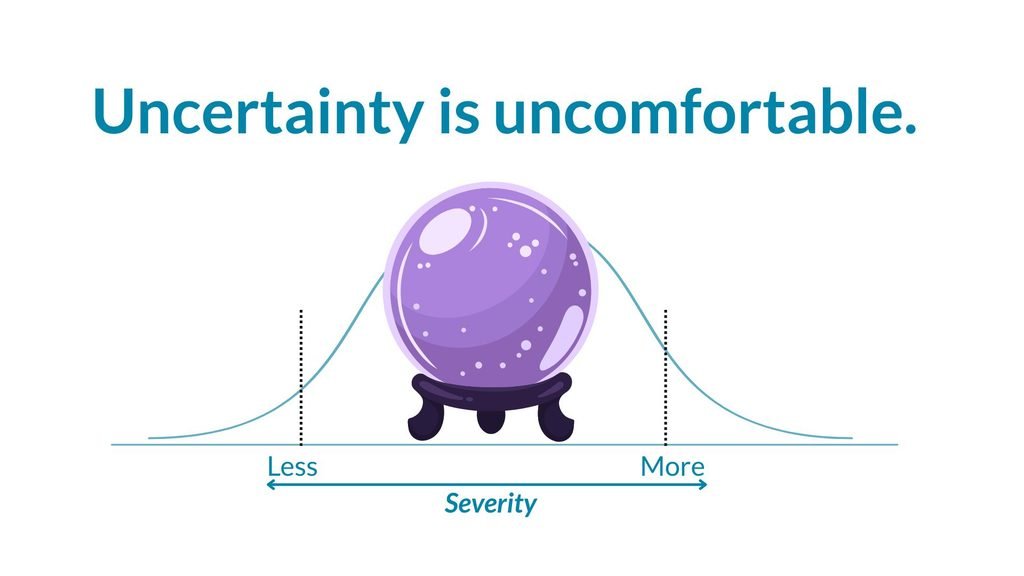
You do not have to understand your child’s entire future today. You can make decisions using the information available now and revisit them as you learn more.
That uncertainty can be hard to sit with. But it also leaves room for growth, support, development, adaptation, and the reality that children are more than their earliest medical data.
Neurodevelopment describes how the brain develops abilities for everyday life. Walking and talking are important, but they are only part of the picture.
Severity levels are often thrown around and confusing, because there are many tools being used for assessments.
Newborn HIE severity does not always match later disability severity. In the Hope for HIE community, we often see children who were critically ill and classified as having severe HIE as newborns whose later abilities and support needs differ substantially from early expectations.
Early findings provide important information, but development and follow-up reveal a fuller picture over time.
Families frequently encounter statistics about HIE online, in research studies and during medical conversations. Those numbers can be useful, but also can be confusing.
HIE studies may include different severity groups, treatments, ages and definitions of disability. Some landmark research focused specifically on babies with moderate and severe encephalopathy who qualified for therapeutic hypothermia. Other research focuses on mild HIE.
Our understanding has also changed over time. Research increasingly examines outcomes beyond survival and major motor disability, including cognition, learning, attention, executive functioning, behavior, vision, epilepsy and quality of life.
Before applying a number to your family, consider:
| Question | Why it matters |
|---|---|
| Who was studied? | Findings from moderate or severe HIE may not apply to mild HIE. |
| What treatment was used? | Treatment and care practices have changed over time. |
| How old were the children? | Toddler assessments and school-age assessments measure different abilities. |
| What counted as an outcome? | Studies use different definitions of disability and measure different areas of development. |

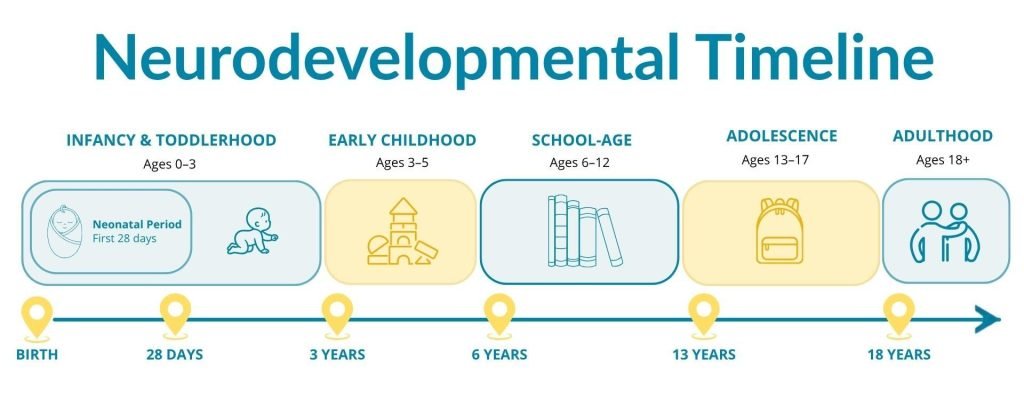
This is one of the questions families ask us most often.
Research following children into school age has significantly expanded what we know about HIE, but our knowledge becomes much more limited as children move into adolescence and adulthood.
Families, and people living with HIE, want to know about:
Education, employment, independence, relationships, mobility, epilepsy, cognition, mental health, quality of life, adult healthcare, caregiving and aging with HIE.
For many of those questions, we still don't have enough HIE-specific longitudinal data.
HIE research has transformed care and greatly expanded our understanding of outcomes, but there are also significant gaps.
We need stronger long-term data across the full spectrum of HIE, including better information about:
We also need more consistent definitions and outcome measures so studies can be compared and combined more effectively.
Through the HIE Registry and collaboration with families, clinicians and researchers, Hope for HIE, and the global HIE community, is working to help build the longitudinal evidence the HIE community needs.
The goal isn't to promise certainty. It's to provide families with better evidence, better counseling, better follow-up and better support across the lifespan.
Our goal is to help families know what to watch for, who to ask, what to ask for, and how to advocate.
Families can use this information to ask:
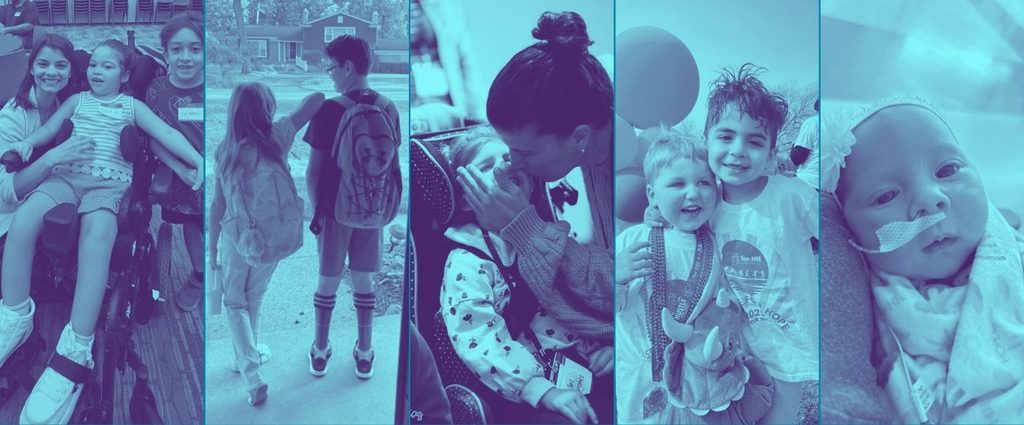
There is no single HIE outcome, and there is no single definition of a meaningful life.
Some people with HIE will need little or no ongoing support. Others will need support at particular points in development. Some will live with significant disabilities and need lifelong care, and sadly, some will pass away.
Across that entire spectrum, people with HIE can experience connection, relationships, learning, participation, belonging, joy and quality of life.
If your family is at the beginning of the HIE journey, you don't have to understand your child's entire future today.
Learn what you can. Ask questions. Follow development. Celebrate strengths. Seek support when it is useful.
Hope for HIE is here across the journey — from diagnosis through childhood, adolescence and adulthood.
Hope for HIE Outcomes Inclusion Statement:
Hope for HIE intentionally, strategically, and specifically ensures the full range of HIE outcomes are captured and represented in our family stories, imagery, support programs and services, educational information, and greater community awareness efforts.
Outside of where a child may fall on the spectrum of outcomes, we are all a part of one global HIE community that no one expected to be in, working towards the same goals of ensuring no family faces HIE alone, decreasing the incidence and impact of HIE, and helping each child and family find their own definition of hope.
Shankaran S, et al. Childhood outcomes after hypothermia for neonatal encephalopathy. New England Journal of Medicine. 2012;366:2085–2092.
Azzopardi D, et al. Effects of hypothermia for perinatal asphyxia on childhood outcomes. New England Journal of Medicine. 2014;371:140–149.
Conway JM, et al. Mild hypoxic ischaemic encephalopathy and long-term neurodevelopmental outcome: a systematic review. Early Human Development. 2018;120:80–87.
Chalak LF, et al. Prospective research in infants with mild encephalopathy identified in the first six hours of life: neurodevelopmental outcomes at 18–22 months. Pediatric Research. 2018;84:861–868.
Finder M, et al. Two-year neurodevelopmental outcomes after mild hypoxic ischemic encephalopathy in the era of therapeutic hypothermia. JAMA Pediatrics. 2020;174:48–55.
Murray DM, et al. Early EEG grade and outcome at 5 years after mild neonatal hypoxic ischemic encephalopathy. Pediatrics. 2016;138:e20160659.
Lee-Kelland R, et al. School-age outcomes of children without cerebral palsy cooled for neonatal hypoxic-ischaemic encephalopathy in 2008–2010. Archives of Disease in Childhood: Fetal and Neonatal Edition. 2020;105:8–13.
Lee BL, Glass HC. Cognitive outcomes in late childhood and adolescence of neonatal hypoxic-ischemic encephalopathy. Clinical and Experimental Pediatrics. 2021;64:608–618.
Basu SK, et al. Neonatal encephalopathy and hypoxic-ischemic encephalopathy: the state of the art. Pediatric Research. 2025.
Cainelli E, et al. Shifting outlooks after neonatal encephalopathy in the era of therapeutic hypothermia. Pediatric Research. 2025.
Connect with families, read inspiring stories, and get helpful resources delivered right to your inbox.


Connect with families, read inspiring stories, and get helpful resources delivered right to your inbox.
