Hope for HIE – Hypoxic Ischemic Encephalopathy Hope for HIE – Hypoxic Ischemic Encephalopathy

What Causes HIE

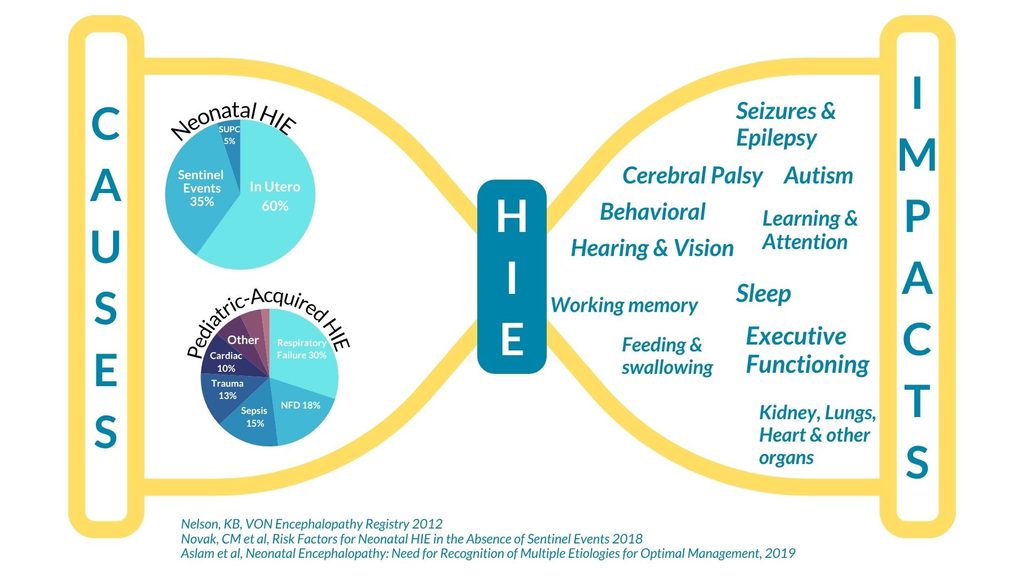
HIE has many causes and sometimes it is even impossible to determine a cause as there are so many factors. The majority of cases (research estimates 80-90%) are not preventable.

Hypoxic-Ischemic Encephalopathy (HIE) is a type of brain injury that occurs when a baby’s brain doesn’t receive enough oxygen and blood flow around the time of birth or in early childhood. HIE is not a single-condition diagnosis—it’s the result of events, complications, or a combination of many things. Neonatal HIE falls under the umbrella of Neonatal Encephalopathy.
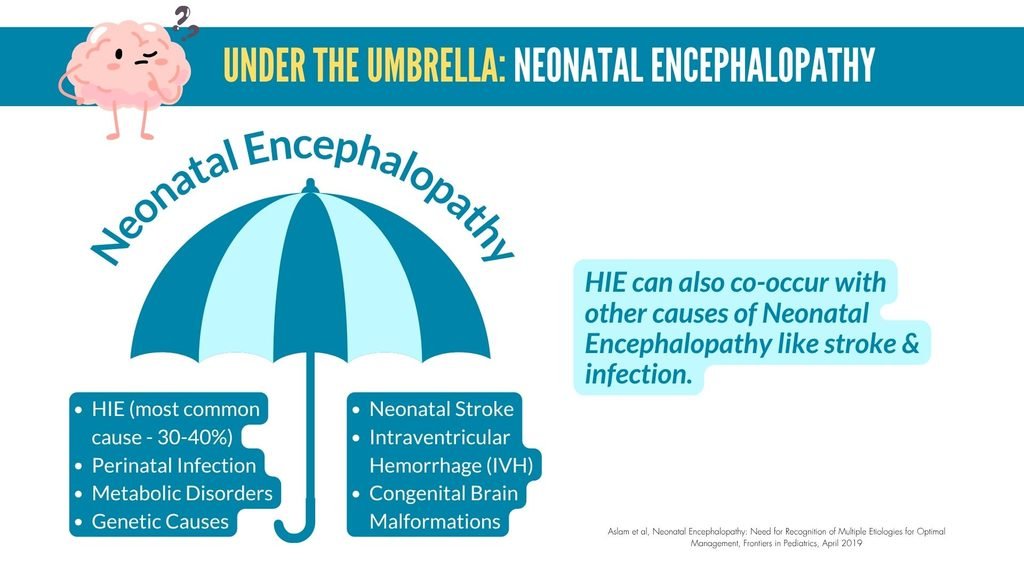
Understanding the potential causes of HIE is an important part of making sense of your child’s medical journey.

In many cases, a clear cause can be identified like a clear sentinel event. In others, the exact reason may remain uncertain despite thorough investigation. This can be frustrating and emotionally difficult for families. Our goal is to provide clear, compassionate information to help you understand the wide range of factors that may contribute to HIE and support you in navigating the questions that follow.

High-Risk HIE Causes
Sometimes HIE can be caused by medical situations that put someone in a “high-risk” category, such as:
  • Previous c-sections where a scar could cause thinning of the uterus (rupture during VBAC can occur)
  • High blood pressure such as Preeclampsia or HELPP syndrome
  • Gestational diabetes, especially if not treated properly, can lead to complications leading to HIE
  • Lifestyle choices such as dependency and use of alcohol, tobacco, or drug use during pregnancy can cause placental abruption
HIE from Umbilical Cord Causes

Sometimes HIE can be caused by various umbilical cord issues. Cord entanglement and compression is rare, but can occur. Sometimes a mother might notice a change in movement during pregnancy. Many of our families had “kick count saves” where movement changed, slowed, or stopped, and they went into Labor and Delivery and their baby was born and resuscitated.

Cord compression can happen intermittently during pregnancy or labor. HIE from too much or too little amniotic fluid, can also affect the umbilical cord leading to HIE.

Examples of cord issues include:
  • Wrapped Cord: If around the neck, it is called a nuchal cord. However, the cord can sometimes be wrapped around the abdomen and limbs.
  • Underdeveloped Cord: Sometimes umbilical cords do not grow correctly, either too short, or are too thin. These are hard to see on routine testing.
  • True Knot: These happen when a knot forms randomly in the umbilical cord.
  • Umbilical Cord Prolapse: This can happen during vaginal delivery, where the cord would deliver before the baby.
HIE from Fetal-Maternal Hemorrhage

Whether associated with a placental abruption, or just spontaneously happening, sometimes fetal-maternal hemorrhage is a cause of HIE. This occurs when a bleed happens internally and the baby and mother both lose a significant amount of blood. Sometimes this happens during pregnancy, and other times during labor and delivery.

HIE from Placental Issues

The placenta is a fascinating and understudied organ. It is very difficult to detect placental issues through standard imaging. There are new research studies underway through the Human Placenta Project to help understand this vital organ in hopes of catching and preventing issues, like those that can lead to HIE.

Some placental issues include:

  • Placental insufficiency: Where the placenta for one reason or another prematurely, or not, ages and gives out, or causes intermittent oxygenation failures.
  • Placental abruption: A very common cause, but with many sub-causes. For some, they have repeat placental abruptions, for some it's lifestyle choice, and for some it's during labor and delivery.
  • Placental clotting: The placenta may also become clotted due to undiagnosed clotting disorders.
  • Placental previa: can also occur where a vaginal delivery would be unsafe for the baby. Placental previa is routinely caught and a c-section is recommended if it does not move during the remainder of pregnancy.
HIE from Maternal Infections

Infections during pregnancy can cause inflammation and affect placental function, potentially leading to HIE. These include:

  • Chorioamnionitis: An infection that occurs in the fetal membranes (chorion and amnion) and the amniotic fluid surrounding the fetus during pregnancy. It is typically caused by bacteria ascending from the vagina into the uterus. Chorioamnionitis can lead to inflammation and infection of the placenta (chorion), amniotic fluid, and the amniotic sac (amnion).
  • COVID-19: COVID has shown to be a newer cause of HIE. In large-scale international studies, vaccination during pregnancy greatly decreases the risk of complications including prematurity and HIE, and does not show any adverse reactions or negative impacts on maternal or fetal health.
HIE from Uterine Rupture & Other Uterine Causes

Uterine rupture is another cause of HIE. This can happen spontaneously during gestation, due to an external incident such as trauma, during an attempt at a VBAC (vaginal birth after cesarean) where a scar could potentially cause a thinning in the uterus leading to rupture, or as a complication from medications like Pitocin that have a risk for causing Uterine Rupture, but are often used during labor.

It is highly recommended to work with a trained physician, or a high-risk physician, to determine your risk factor for birth options and repeat of issues.

HIE from Labor & Delivery

Labor and delivery is a complex process. Many factors come together for a healthy and successful birth. Sometimes, things go well, and other times they do not. Sometimes these are preventable, other times they are not.

Causes such as shoulder dystocia, where a baby gets "stuck" due to a position or a large baby, may or may not be preventable. While imaging can take a best guess at the size of a baby, many times ultrasound is inaccurate and a baby may be larger than originally predicted, or a mother's pelvic girdle is not wide enough to birth a child vaginally.

Location of birth can also increase risk factors. Out of hospital births have a 4x greater incidence rate of HIE and worse adverse outcomes than in-hospital, due to time and resourcing to care. This is especially prevalent in lower resourced areas and countries who do not have access to high-quality maternal and delivery care.

Occasionally, with the above possibilities such as cord compression, placental abruption, etc. some babies need emergency c-sections if there are distress factors that occur. Sometimes these are preventable, and sometimes they are not.

Estimates from the latest validated data sets estimate HIE caused by preventable medical errors, negligence, and malpractice are anywhere between 5-20%. More may be prevented with more consistent CTG monitoring, which is often resource, location and preference-dependent.

HIE from Blood Clotting Disorders

Many blood clotting disorders are not detected until something goes wrong to bring them to light, as they are not standard panels and are rare. However, many of our families have found out post-HIE that they are carriers of various blood clotting disorders such as MTHFR. More research is needed to see if there is more of connection and if certain blood tests would better screen for potential issues to the mother and child.

HIE from Post-Birth Causes

Many families have babies whose HIE was not obvious right away, or who developed HIE in post-birth situations. Some of those include:

  • Breathing issues upon birth: If there are no other causes with needing to be resuscitated, sometimes babies have a harder time transitioning from inside to the outside and require ventilation. Sometimes if there is a period where breathing is unable to be started up or ventilated quickly, HIE can happen.
  • Hypoglycemia or hyperglycemia: Sometimes a baby, and more common with gestational diabetes, will have a hard sugar crash. Sometimes that can cause seizures and a lack of oxygen from the crash leading to HIE.
  • Meconium Aspiration Syndrome: If a baby has come into contact with the first bowel movements, which can sometimes be released during labor and delivery, they are at risk to aspirate. Meconium is thick and sticky and can case MAS. This can also lead to HIE.
  • Infections: While some infections are routinely screened for such as GBS (Group B Strep), Chorioamnionitis or other bacterial infection that is undiagnosed, a baby can become septic and be at risk to develop HIE from the systemic crash that occurs.
  • Sudden Unexpected Postnatal Collapse: An unexpected deterioration in a newborn's condition within the first 12-48 hours after birth can include families noticing seizures or a baby turning blueish. These babies often show symptoms later, but had good APGAR scores. MRIs often reveal HIE. HIE is the leading cause of neonatal seizures. SUPC can also be caused by positional accidental asphyxiation leading to HIE.
HIE from Causes in Childhood

Because the combination of a lack of oxygen and lack of blood flow to the brain can cause HIE, some children who experience cardiac arrest due to several different causes, or a near-SIDS event in childhood, can experience HIE.

Sometimes these are near-drownings, sometimes accidental smothering during sleep, and others due to unexpected physical trauma.

Genetic Influence & Genetic Disorders

There is emerging evidence that genetics can either make a baby more susceptible to HIE, or identified genetic mutations may co-occur with some HIE. In the recent HEAL study, 5% of babies had a genetic mutation, and some additional studies have shown upwards of 20%.

Understanding what babies may not be able to tolerate labor, for instance, due to genetics could lead to better interventions, decrease the incidence and impact of HIE.

You can read more below on the latest research below:

Read More
References
  1. Adherence to Perinatal Asphyxia or Sepsis Management Guidelines in Low- and Middle-Income Countries. Rahman A, Ray M, Madewell ZJ, et al. JAMA Network Open. 2025;8(5):e2510790. doi:10.1001/jamanetworkopen.2025.10790.
  2. Need for More Evidence in the Prevention and Management of Perinatal Asphyxia and Neonatal Encephalopathy in Low and Middle-Income Countries: A Call for Action. Krishnan V, Kumar V, Variane GFT, et al. Seminars in Fetal & Neonatal Medicine. 2021;26(5):101271. doi:10.1016/j.siny.2021.101271.
  3. A Survey on the Diagnosis and Management of Neonatal Hypoxic Ischaemic Encephalopathy in Sub-Saharan Africa. Naburi HE, Pillay S, Houndjahoue F, et al. Scientific Reports. 2024;14(1):22046. doi:10.1038/s41598-024-72849-3.
  4. High Incidence of Poor in-Hospital Outcomes of Term Newborns With Hypoxic-Ischaemic Encephalopathy Admitted at a Regional Referral Hospital in Dodoma, Tanzania. Mwatonoka JF, Jumanne S, Nyundo A, Kruger C. Acta Paediatrica (Oslo, Norway : 1992). 2023;112(8):1774-1782. doi:10.1111/apa.16592.
  5. Neonatal Neurocritical Care in Low-Resource Settings: Challenges and Innovations in Hypoxic-Ischemic Encephalopathy. Craig A, DeLaGarza-Pineda O. Clinics in Perinatology. 2025;52(2):361-374. doi:10.1016/j.clp.2025.02.002.
  6. Review of Low-Cost Interventions for Reducing Neonatal Mortality and Morbidity in Low- And Middle-Income Countries. Huynh LT, Tran HT, Vanhaesebrouck S. Acta Paediatrica (Oslo, Norway : 1992). 2025;. doi:10.1111/apa.70133.
  7. Epidemiology of Neonatal Encephalopathy and Hypoxic-Ischaemic Encephalopathy. Kurinczuk JJ, White-Koning M, Badawi N. Early Human Development. 2010;86(6):329-38. doi:10.1016/j.earlhumdev.2010.05.010.
  8. Maternal Social Determinants of Health and Risk of Perinatal Hypoxic-Ischemic Encephalopathy. Gano D, Kuzniewicz MW, Montoya-Williams D, et al. JAMA Neurology. 2025;:2835500. doi:10.1001/jamaneurol.2025.1659.
  9. Trends and Predictors of in-Hospital Mortality Among Babies With Hypoxic Ischaemic Encephalopathy at a Tertiary Hospital in Nigeria: A Retrospective Cohort Study. Ezenwa BN, Olorunfemi G, Fajolu I, et al. PloS One. 2021;16(4):e0250633. doi:10.1371/journal.pone.0250633.
  10. Neonatal Encephalopathy: Focus on Epidemiology and Underexplored Aspects of Etiology. McIntyre S, Nelson KB, Mulkey SB, et al. Seminars in Fetal & Neonatal Medicine. 2021;26(4):101265. doi:10.1016/j.siny.2021.101265.
  11. The Impact of Birth Settings on Pregnancy Outcomes in the United States. Grünebaum A, Bornstein E, McLeod-Sordjan R, et al. American Journal of Obstetrics and Gynecology. 2023;228(5S):S965-S976. doi:10.1016/j.ajog.2022.08.011.
  12. Neonatal Hypoxic Ischemic Encephalopathy and Planned Home Birth. Buchanan C, Kuo S, Minton L, et al. Journal of Midwifery & Women's Health. 2022;67(1):69-74. doi:10.1111/jmwh.13309.
  13. Planned Home Birth and the Association With Neonatal Hypoxic Ischemic Encephalopathy. Wasden SW, Chasen ST, Perlman JM, et al. Journal of Perinatal Medicine. 2017;45(9):1055-1060. doi:10.1515/jpm-2016-0292.
  14. Intrapartum Factors Associated With Neonatal Hypoxic Ischemic Encephalopathy: A Case-Controlled Study. Torbenson VE, Tolcher MC, Nesbitt KM, et al. BMC Pregnancy and Childbirth. 2017;17(1):415. doi:10.1186/s12884-017-1610-3.
  15. Antenatal and Intrapartum Risk Factors for Neonatal Hypoxic Ischemic Encephalopathy. Peebles PJ, Duello TM, Eickhoff JC, McAdams RM. Journal of Perinatology : Official Journal of the California Perinatal Association. 2020;40(1):63-69. doi:10.1038/s41372-019-0531-6.
  16. Maximum Dose Rate of Intrapartum Oxytocin Infusion and Associated Obstetric and Perinatal Outcomes. Son M, Roy A, Grobman WA, et al. Obstetrics and Gynecology. 2023;141(2):379-386. doi:10.1097/AOG.0000000000005058.
  17. Cumulative Oxytocin Dose in Spontaneous Labour - Adverse Postpartum Outcomes, Childbirth Experience, and Breastfeeding. Brüggemann C, Carlhäll S, Grundström H, Ramö Isgren A, Blomberg M. European Journal of Obstetrics, Gynecology, and Reproductive Biology. 2024;295:98-103. doi:10.1016/j.ejogrb.2024.01.040.
  18. Oxytocin Administration in Low-Risk Women, a Retrospective Analysis of Birth and Neonatal Outcomes. Espada-Trespalacios X, Ojeda F, Perez-Botella M, et al. International Journal of Environmental Research and Public Health. 2021;18(8):4375. doi:10.3390/ijerph18084375.
  19. Perinatal Outcomes of High Dose Versus Low Dose Oxytocin Regimen Used for Labor Induction and Factors Associated With Adverse Perinatal Outcome in Four Hospitals of Ethiopia: A Multicenter Comparative Study. Tesemma MG, Sori DA, Gemeda DH. BMC Pregnancy and Childbirth. 2021;21(1):588. doi:10.1186/s12884-021-04052-5.
  20. Cerebral Palsy After Neonatal Encephalopathy: How Much Is Preventable?. Garfinkle J, Wintermark P, Shevell MI, Platt RW, Oskoui M. The Journal of Pediatrics. 2015;167(1):58-63.e1. doi:10.1016/j.jpeds.2015.02.035.2.
  21. Antenatal and Intrapartum Risk Factors for Hypoxic-Ischemic Encephalopathy in a US Birth Cohort. Parker SJ, Kuzniewicz M, Niki H, Wu YW. The Journal of Pediatrics. 2018;203:163-169. doi:10.1016/j.jpeds.2018.08.028.
  22. New Possibilities for Neuroprotection in Neonatal Hypoxic-Ischemic Encephalopathy. Victor S, Rocha-Ferreira E, Rahim A, Hagberg H, Edwards D. European Journal of Pediatrics. 2022;181(3):875-887. doi:10.1007/s00431-021-04320-8.
  23. Neonatal encephalopathy and hypoxic-ischemic encephalopathy: the state of the art. Chakkarapani, E., de Vries, L. S., Ferriero, D. M., & Gunn, A. J. (2025).  Pediatric research, 10.1038/s41390-025-03986-2. Advance online publication. https://doi.org/10.1038/s41390-025-03986-2
  24. Genetic and Congenital Anomalies in Infants With Hypoxic-Ischemic Encephalopathy. Morell, A. S., Monsell, S. E., Cornet, M. C., Wisnowski, J. L., McKinstry, R. C., Mathur, A. M., Li, Y., Glass, H. C., Gonzalez, F. F., Mayock, D. E., Benninger, K. L., Van Meurs, K. P., Lampland, A. L., Wu, T. W., Riley, D., Mietzsch, U., Chalak, L., Flibotte, J., Weitkamp, J. H., Ahmad, K. A., … Wu, Y. W. (2024). Pediatric neurology154, 44–50. https://doi.org/10.1016/j.pediatrneurol.2024.02.007

Regardless of cause, Hope for HIE welcomes all families to join in our support network of over 10,000 families from around the world.

We have comprehensive support programs and services for the whole family, across all outcomes, impacts and ages. We know navigating HIE is filled with many questions and we are here for you.

Join Our Community

SIGNUP

Connect with families, read inspiring stories, and get helpful resources delivered right to your inbox.

  • This field is for validation purposes and should be left unchanged.