

HIE—hypoxic ischemic encephalopathy—can happen later in infancy or childhood when the brain does not receive enough oxygen and blood flow. This is called pediatric-acquired HIE. It may happen following events such as drowning, cardiac arrest, choking, or a serious medical emergency.
If your child has recently experienced HIE, you may be trying to understand what happened while facing unfamiliar medical information and uncertainty about the future.
Hope for HIE supports families affected by both neonatal and pediatric-acquired HIE. Whatever brought your family here, you don’t have to navigate this alone.
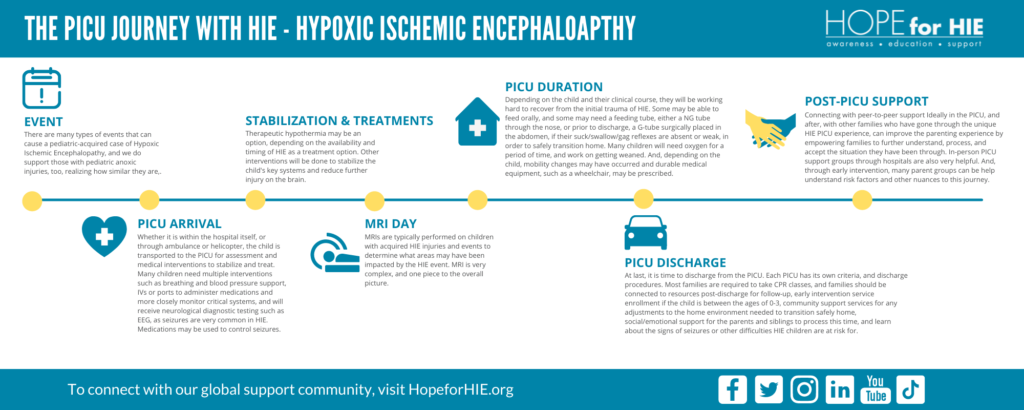
Your child may receive emergency care before being admitted or transferred to a pediatric intensive care unit (PICU) or another specialized unit.
The first priority is supporting your child’s immediate medical needs. Depending on their condition, this may include help with breathing, blood pressure, heart function, and other organs, along with care to protect the brain from further injury.
There is no single treatment timeline for pediatric-acquired HIE. Your child’s care will depend on their age, what happened, and how their body and brain respond.
Your child’s team may use neurological examinations, EEG monitoring, brain imaging, and other tests to better understand the injury and guide care.
An EEG records the brain’s electrical activity and can help identify seizures, including those without visible signs. An MRI provides detailed images of the brain and may help show areas of injury.
These findings need to be considered together and over time. Medicines used for comfort or sedation, along with your child’s medical condition, can affect some assessments.
Ask your team to explain what they know, what remains uncertain, and when they expect to have more information.
The PICU can feel overwhelming. You may be hearing unfamiliar terms, meeting many specialists, and trying to take in information while processing a frightening experience.
You are an important part of your child’s care team. Your knowledge of their personality, communication, routines, and needs can help the team provide individualized care.
Ask about participating in daily rounds or arranging a family meeting. Depending on your child’s medical stability, the team can also help you find safe ways to comfort, touch, hold, read to, or otherwise connect with them.
Hospital social workers, child life specialists, interpreters, and other support staff can help your whole family during this time.
One of the hardest questions is, “What will this mean for my child?”
HIE has a wide range of outcomes. Your child’s team will consider their clinical course, examinations, and test results when discussing possible impacts. Some information becomes clearer during hospitalization; other needs may become apparent over time.
You deserve honest conversations about what is known and what is uncertain, along with a plan for care and follow-up.
You can ask:
Hope can include comfort, connection, participation, and quality of life across every outcome.
As your child’s condition changes, their team will assess what support they need next. Some children go home from the hospital. Others move to a rehabilitation program or another care setting.
Depending on their needs, care may include physical, occupational, speech and language, or feeding therapies, along with support for communication, learning, and daily activities.
Before a transition, ask for a clear plan covering medications, equipment, caregiver training, follow-up appointments, and who to contact with questions. If your child is returning to school or childcare, ask how the medical and educational teams can help plan that transition.
Follow-up matters even when a child appears to be doing well after leaving the hospital.
Your child’s needs may change as they grow and return to everyday activities. Ongoing care can help identify and support changes in movement, communication, learning, attention, behavior, emotional well-being, vision, hearing, feeding, or seizures.
Talk with your team about developmental monitoring, rehabilitation, and age-appropriate services. Share changes you notice and ask for reassessment when concerns arise.
Pediatric-acquired HIE can affect the whole family. Parents, siblings, and extended family members may need different kinds of support at different times.
Hope for HIE offers social work and child life services, trained peer mentorship, support groups, and connections with other pediatric-acquired HIE families. Our support is available across outcomes, including for families facing end-of-life care or the death of a child.
You don’t need to have everything figured out before reaching out. We can help you find a place to begin.
Connect with families, read inspiring stories, and get helpful resources delivered right to your inbox.


Connect with families, read inspiring stories, and get helpful resources delivered right to your inbox.
