

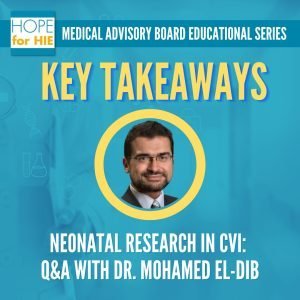
At Hope for HIE, we work to connect the HIE community with the researchers and clinicians shaping the future of HIE care. In the latest session of our Medical Advisory Board Educational Series, board member and HIE parent Melissa Akinlawon, MA, sat down with Dr. Mohamed El-Dib, MD, Director of Neonatal Neurocritical Care at Mass General Brigham for Children, to talk about […]
For years, the word “mild” carried a reassuring implication in HIE: Mild HIE meant the baby would probably be “fine”. That belief shaped research, clinical care, and communication with families. Babies classified as having mild HIE were generally excluded from the original randomized therapeutic hypothermia trials because they were believed to have a favorable prognosis, without long-term data making that […]
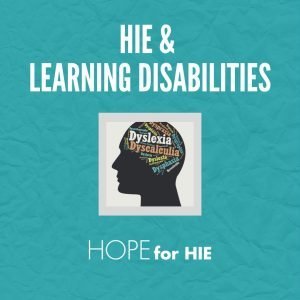
Learning and attention challenges are prevalent in our community. While early identification is possible between the ages of 3-5, most children are not able to be identified until ages 5-8 because of how the brain develops, and when higher order thinking and learning begins to happen. The incidence is estimated roughly 40% of those who do not develop cerebral palsy, […]
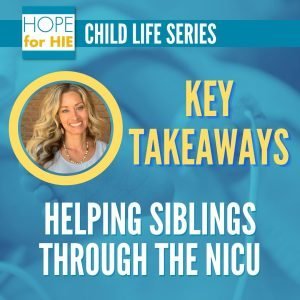
In honor of NICU Awareness Month, Hope for HIE’s Certified Child Life Specialist, Annie Gunning, shares a favorite book and simple, meaningful ways to help big brothers and sisters feel connected to a baby in the NICU. What is a Child Life Specialist? Child life specialists are experts in child development and family dynamics, helping them navigate the emotional and […]
For decades, age two has been one of the most important checkpoints in HIE research. There’s a good reason for that. It’s called the Bayley Scales of Development, and it’s the most commonly used assessment for clinical trials. By 18–24 months, clinicians can assess important areas of development, including motor, cognitive and language skills. Many foundational studies of therapeutic hypothermia […]
Connect with families, read inspiring stories, and get helpful resources delivered right to your inbox.


Connect with families, read inspiring stories, and get helpful resources delivered right to your inbox.


